American and Russian engineers are getting closer to a new plan for cooperating in space, one that would go beyond low Earth orbit and preserve the multinational alliance forged at the dawn of the International Space Station program in 1993. Organizations on both sides are quietly toying with the idea of going back to the moon together. That is, if politics don't get in the way.
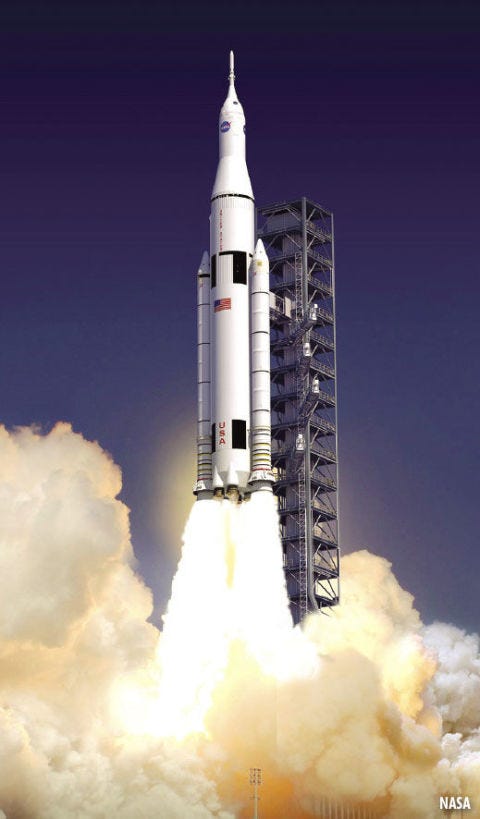
With the ISS scheduled to make a controlled plunge into the ocean in 2024, the partners have been preparing to go their own ways. NASA, while funding companies like SpaceX to go to orbit, is developing the Orion spacecraft and the super-heavy rocket called Space Launch System (SLS) for manned missions into deep space and potentially as far as Mars. The European Space Agency (ESA) jumped on NASA's bandwagon few years ago, agreeing to contribute the service and propulsion module for the Orion. But the second-largest ISS contributor, Russia, has so far remained uncommitted to any joint venture beyond the station.
"Don't think of it as a space station around the Moon. Think of it as the beginning of the Mars transit system."
A recent economic crisis in Russia has put a dumper on the nation's space activities. But a bigger problem for cooperation in space may be the souring relationship between Moscow and Washington back on Earth. While NASA and the Russian space agency Roskosmos try to navigate the political minefield, industry engineers on both sides formed their own alliances to look into the matter from the technical prospective.
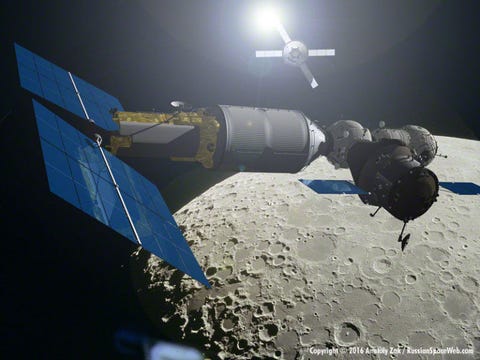
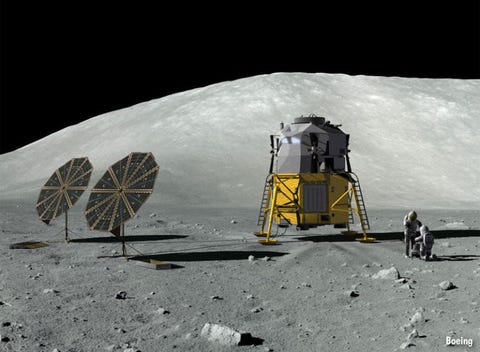
American aerospace companies such as Boeing and Lockheed Martin, as well as Russia's key manned space contractors RKK Energia and GKNPTs Khrunichev, pitched in on a new plan to work together. Several mission strategies have recently surfaced that focus on a multinational habitat in the vicinity of the Moon, known as cislunar space. It could serve as a platform for the exploration of our natural satellite and a springboard for missions to asteroids and even to Mars.
The two sides seem to understand why they need each other, and how the pieces fit together. For their part, the Russians have mastered the development and operation of space modules that can house crews and provide propulsion for years at a time. Turns out, that's exactly what the U.S. could use. Such a habitat would expand the livable volume for the Orion crews beyond the cramped one-room compartment of the ship's command module, extending the possibilities for missions.
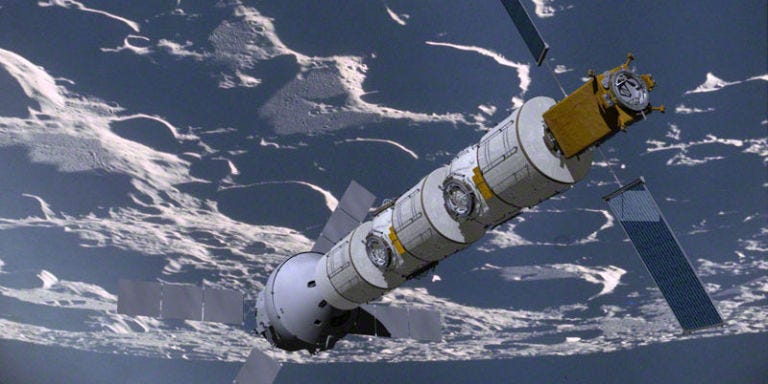
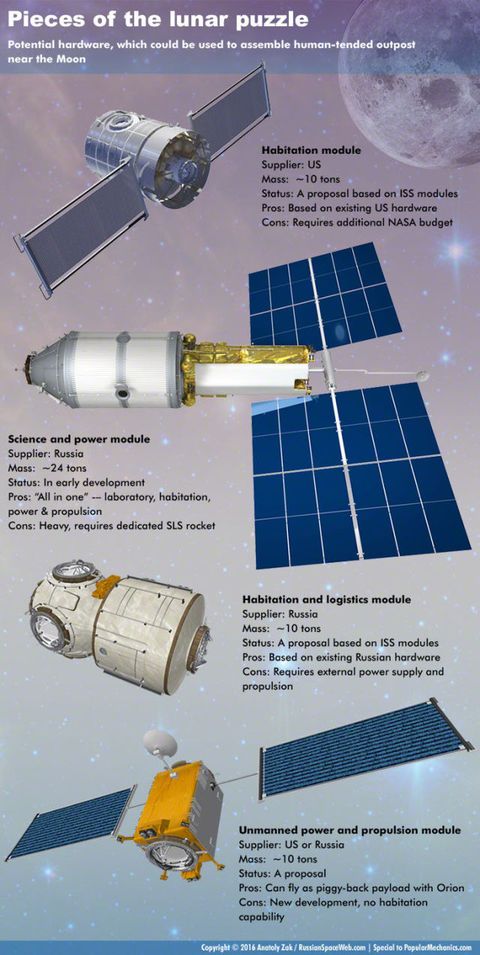
In consultations with their American colleagues, Russians offered a selection of off-the-shelf or soon-to-be-available hardware for constructing the joint deep-space habitat. For example, a small docking compartment built by RKK Energia for the ISS could be easily replicated and converted into a 10-ton add-on for the hypothetical near-lunar habitat, with its own life-support system, sleeping quarters and cargo space. Each piece of an ever-growing base could be launched over a period of several years as cargo that piggybacks on SLS rocket launches. Russian engineers drafted a mini-train of such modules, which would be lined up one by one behind an unmanned space locomotive, providing propulsion and 150 kilowatts of electric power.
Alternatively, Russia could supply an all-in-one module for the new base that would have power, propulsion, and large living quarters for the crew. It is based on the most advanced Russian module, which is being developed as a potential cornerstone of thefuture Russian space station in the Earth's orbit. The drawback? A nearly 24-ton spacecraft will require a dedicated SLS rocket to boost it toward the Moon, leaving no room for the Orion or its crew on that launch.